Reflections of an Advocate, September 17, 2010

Bigotry is inhumane.

For as long as far back as memory allows me I have always found it troubling when people were being treated inhumanely. This may explain why two of my childhood heroes were Dr. Martin Luther King Jr. and Geronimo. They still are heroes of mine. The hero list for me has grown since then. It now includes Elie Wiesel, Nelson Mandela, Gandhi, Frederick Douglass, Coretta Scott King, Dorothy Height, Father Mychal Judge and others.

Anyway, today’s reflections revolve around those moments all advocates face when you simply can’t believe the challenge you are facing is even there in the first place. For example, it boggles my mind that there is even a question about making sure polling sites are accessible to all. There is even a cluster of numbnuts who call themselves, I swear to God, the Lever Lovers. They seem to think  voting machines with levers are the only way to go, too damned bad if you are paralyzed. Boggles the mind, at least it does mine.

And then there were two moments this morning that boggled my mind in similar fashion.

First, I left a voice mail for Timothy J. Feeney asking why his company’s voice mail (call them yourself) has, for some time now, said they are under contract with the Department of Health whey they’re not and did he intend to continue to misrepresent his credentials to adults and children with disabilities.

Second, an email was sent to Maria Dibble, executive director of STIC (Southern Tier Independence Center) in Binghamton, NY, again asking her to explain why STIC, which is likely to be under contract with the New York State Department of Health for the Neurobehavioral Resource Project, plans to give the work to someone like Feeney.

There was a moment when I sat back, took a sip of my coffee, and shook my head. It struck me as somewhat unbelievable that any of us have to deal with someone prancing around pretending to have degrees they don’t have much less ask questions of a provider like STIC, that apart from this situation has a good reputation, why they plan to give work to the prancing ninny.

But, when I find myself shaking my head over perplexing challenges like these, I remind myself of the days people were made to ride in the back of the bus or drink and eat in specific locations because of the color of their skin. That was pretty unbelievable too.

So, the bad news? Bigotry marches on. Only bigotry would allow someone to think it is okay to be or to hire someone who is misleading an entire population of people.  The good news? Advocacy, including this advocate, marches on as well. I like my role models: King, Geronimo, Height, Mandela, Gandhi, Douglass, Wiesel.  Who might the role models for the bigots be? Maybe the likes of Bull Connor, Lester Maddox, David Duke, George Lincoln Rockwell, Adolf Hitler.

I like my role models better.

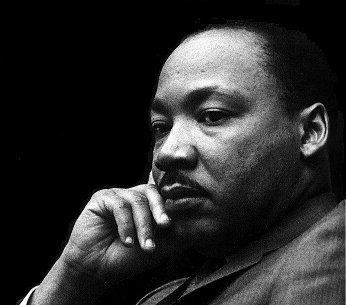
Happy Birthday Martin

*
He would have been 81 today.

Since my childhood, Dr. Martin Luther King Jr., born this day in 1929, has been a hero of mine. He has been an example, one I have not always successfully followed, in how to use the power of nonviolence to manage the forces of bigotry, hatred, evil and injustice.

While Dr. King left this world far too soon in 1968, his method of protest and his example of physical, emotional and spiritual courage will live on as long as the human race lives on. If the human race fails to learn the lessons he taught us, and fails to apply those lessons to the care of mother earth, the human race will do anything but live on.

I remember hearing an exchange Dr. King had with some young black activists who were debating the value of non-violence with him. Dr. King said the following. “Nonviolence is like water. If you have a fire and you throw a bucket of water on it and it doesn’t go out, it doesn’t mean water doesn’t put out fire. It means you need more water.”

He’s right.

It seems to me the same equation applies to the importance of keeping our voices raised in the disability civil rights struggle or the gay civil rights struggle and so on. If our voices are not creating change, it doesn’t mean the voices of the people don’t create change, it means we need more voices.

Happy Birthday, Martin. You are missed and loved by more people than you could have ever imagined.

******************************************************

DEAR MARTIN – WORDS FOR A KING


Dear Martin,


I have looked up to you since I was a little boy. I was only 14 years old when you were killed. I cried until my eyes were swollen and when we went to church that Sunday our minister, who had marched with you many times, told all of us that the American family had a role in your death. That this country, my country, had been crippled by the poison of racism, of hatred. He called on each of us to carry your message and work hard for your dream. To work hard for the day when children and adults were no longer judged by the color of their skin but by the content of their character.


We are closer, Martin. We are closer. This Tuesday, the day after the day honoring you, the first African American will become the president of the United States. My eyes flood with tears of joy just writing that sentence.


The struggle for equal rights goes on on many fronts. You have been my role model in my efforts, although I have yet to reach your place of faith and spirituality. But I have held you close to my heart all these years, and having you there helps me. The price I have paid for my part in civil rights pales by comparison to the price paid by so many good and decent people. some paying with their lives, a price I am humbly willing to pay as well to assure justice and equality for all people.


Not long ago I was pushed out of a health care company because they needed to evict a voice they could not silence, a voice that insisted that the people receiving services there be treated with respect and given choice. In the scheme of things, my price was a small one.


You once said, “Change does not roll in on the wheels of inevitability, but comes through continuous struggle.” So true.


I don’t know what remains for me in life. But I do know that I am blessed to be on the board of an association that works with people who have survived brain injuries and I was recently appointed to a council that works heart-and-soul hard to make sure people with disabilities are afforded the chance to be as independent in the world we all live in, which includes equal rights.


God bless you, Martin, wherever you are. If you see my father and my family, give them my love and let them know I am doing my best. Perhaps they already know. I’m never quite sure about that one.


I’m going to include a link below for my readers to go to so they can see your “I Have a Dream Speech.”


Thank you, Martin, for all you’ve done for all. The struggle continues for many, and I will be in it until my last breath.


With love and respect,


Peter


http://www.youtube.com/watch?v=iEMXaTktUfA&feature=related

________________________________________________________________

PEACE

It is no coincidence that the majority of Christmas cards I’ve had the pleasure to retrieve from my mailbox this year have the word peace on them. In many respects, the word, peace, is my favorite word in the language. Not for its sound, mind you. I think the word Tuckahoe may be one of my favorites when it comes to a word’s audio reality.


With my country at war on two fronts, it makes sense peace is on the minds of many, in and out of my country.


Peace, real peace, comes in many forms. The human mind and body, relaxed and at ease. A society built on understanding and acceptance rather than judgment and harsh discipline. There is the peace that comes with the alleviation of hunger and suffering. There is the spiritual peace one feels when experiencing a sunrise or sunset. There is the peace one feels when holding hands with a loved one. There is something gentle and exquisite about hand holding. While I don’t think I’ve been as good at it as I would like to be, the wonder of it is not lost on me.


Then too there is something Dr. Martin Luther King Jr. once said: “True peace is not merely the absence of tension: it is the presence of justice.” It dawned on me, when I read that sentence of King’s, that there cannot be peace where there is injustice.


There is also the cautionary note sounded by Ralph Waldo Emerson in his essay Self Reliance. “A political victory, a rise in rents, the recovery of your sick, or return of your absent friend, or some other quite external event, raises your spirits, and you think good days are preparing for you. Do not believe it. Nothing can bring you peace but yourself. Nothing can bring you peace but the triumph of principles.” While I am not sure that I entirely agree with him, I do agree that no one but you can bring you peace. It is in how you respond to and relate with the events in life, not so much the events themselves. Okay, maybe I do agree with Mr. Emerson. More thought required here.


I know that for me and quite a few others I know, this has been a brutal year. I have had been stabbed in the back by a nice array of slimy types, one or two so steeped in their own arrogance they don’t think I know it’s them that did the deed, and still others so oblivious to the fact their fellow human beings have feelings they are, I sadly suspect, beyond repair or redemption. Thankfully the repair and redemption parts are not for me to determine. Do I forgive them? Yes, of course I do. But do not for a moment think that forgiving them means I do not think they should be held accountable. They should be and they will be. Remember what King said about the presence of justice.

When I talked quite some time ago to Brother Gregory, a wonderful friend of mine, about my anger and hurt at being betrayed by some I trusted, he instantly right-sized me by saying, “Peter, people betrayed Jesus. What makes you think they won’t betray you?”


This has been a rather wandering and poorly written piece, and for that I apologize. I can attribute it to my still fighting off a fever but I think that would be a tad disingenuous on my part.


Here is what I can say, to all of you, including those that done me wrong,who read this blog. I do hope the day comes when peace, true peace, is your constant companion.


__________________________________________________________________

THE COST OF ADVOCACY – Part II

Seems I’ve stirred the pot a bit (Peter stirring the pot? Who would have thought?) with the last blog entry, “THE COST OF ADVOCACY.”


While some agreed with my friend’s genuine concern that I learn to pull back at times in my advocacy rather than, say, lose a job, most supported my view (a view shared by the likes of Dr. Martin Luther King Jr., Elie Wiesel, Mahatma Gandhi, Susan B. Anthony, Malcolm X, Nelson Mandela and others) that if you are going to be a human rights advocate, you can’t be one only when it doesn’t call on you to sacrifice or take a hit in some way.


I will not identify anyone who has responded to the last missive because those that have are people I like very much, even though, in some cases, I unflinchingly disagree with them.


One of the several who agreed with my friend’s caution said when I lose a job or take a major hit because of my unwillingness to restrain my advocacy, I “force everyone else to pay for (my) advocacy when instead of keeping quiet, getting another job, pulling back or whatever, you end up having to ask countless people including strangers to help you out because of it. Sorry, but I think your friend is right, a calm life slicing cold cuts at the deli is a perfectly acceptable way to live and also contributes to the world.”


There is no doubt working at a deli contributes to the world in a very real way. However, I would take issue with some of this person’s assertions. I don’t force anyone to do anything. Anyone who has recently helped me has done so because they care and, in most instances, are my friends. This is what friends do, it seems to me. They help each other through hard times and they don’t resent it. Not too long ago someone who is like family to me fell into hard times and I was able to send them a bit of money on a monthly basis for a little while and I felt both grate and grateful that I was able to help. So, no, I don’t force anyone to do anything.


However, this one respondent may or may not have company when it comes to the view that pulling back might be a wise thing from time to time. Yet, a closer examination of their reasoning could lead one to conclude that they are more concerned about my friends being inconvenienced than my welfare. People can share the same opinion for different reasons.


Here is what pulling back on my advocacy would mean to me (which does not mean this is what it means to others, those who agree or disagree with me). Pulling back to me means staying silent when others are being mistreated in order to keep my job, or my apartment, or home, or, for that matter, my life.


Case in point. Years ago, I moved into an attic apartment in Brooklyn after my first divorce. A close friend of mine was black. He came to see me one day. We had breakfast, talked, watched a movie, went for a walk, he went home. Moments after he left there was knock on my door. It was the landlord. They wanted to see me in their downstairs apartment. I went down to see them and they explained that while they had no problem with “his kind” visiting me, the neighbors did and so my friend could not come see me anymore.


I moved out. Was I wrong, should I have told my friend, sit tight, I’m only going to be here a year or so; you can’t come by to visit because you’re black?


A friend and I physically intervened once in a brutally violent situation on Court Street in Brooklyn when a young black man was being savagely beaten with boards and pipes because he had walked through a white neighborhood. My friend and I jumped in, shielded this bleeding battered man from a gang of more than 20 raging young whites, and, with the help of another man, kept him safe for a good 10 minutes before the police arrived.


Should we have stayed out of it so our lives would not be at risk, never mind that had we chosen to stay out of it, this young black man would almost certainly have been killed?


And what would people think the healthy choice would be were I, or they, working in a situation where blacks were called niggers or Latinos were called spics or gays were called fags or Jews were called kikes? Should silence rule so employment remains?


Don’t get me wrong. There are times when honing one’s form of advocacy is a wise choice No doubt, I could improve. We all could. But stay silent or pull back so I can keep a job or avoid inconveniencing friends? I don’t think so. Anyway, I don’t think anyone who is my friend feels inconvenienced, in large part because they know me well enough to know that if they fell on hard times, I’d help them, with joy and humility.


The best definition of humility I have ever heard was, “Humility is not thinking less of yourself, it is thinking less about yourself.”

____________________________________________________