Unknown's avatar

About Peter Sanford Kahrmann

Writer, disability rights advocate, civil rights advocate.

For the likes of this lad

*

Stone bone weary sadness buckles my days  stumbles my nights

No use dreaming like I just done did again never

Learnin’  sunshine days visit  but never stay

For the likes of this lad

*

Wounded hearts bleed from wounded souls starving still

Love’s last chance offered by splayed fingerhands breaking

The sweat stained life’s killing habits leaves only darkness

For the likes of this lad

*

Warm sun mornings hint dreams worth dreaming

Muscled legs standing back straightens tears wiped clear

Birds sing jewels into the morning air joyous

For the likes of this lad

*

Leavin’ no song unsung poem unread dream undreamed

Leavin’ no hug  no kiss  no touch unfelt

Leavin’ no chance untried no love unloved no breath undrawn

For the likes of this lad

*

Embracing Chief Joseph

On October 5, 1877 Chief Joseph of the Nez Perce tribe ended his powerful and poignant surrender speech with the words, “From where the sun now stands I will fight no more forever.” This is exactly where I am at in my personal life. These days I prefer to cede ground or disengage from the discourse at hand altogether when a difference in view or perception or belief or memory finds itself on combative terrain, even remotely so. I don’t have the energy, desire, will, or, frankly, the time to snarl these things out, meaning, I don’t want to argue or fight. I first heard my friend Eric  say, “Don’t pick that hill to die on” more than 10 years ago and the phrase has more than once helped me recognize moments when falling silent or walking away was the healthiest choice. When a difference between individuals or people in my personal life becomes about winning or losing rather than a discourse in which each is truly listening to the other, truly considering what the other is presenting, a pattern of communication that, when in play, provides a foundation for understanding and clarity, I just can’t do it anymore. A difference between two is not sport or war; it’s not about winning or losing.

You see, I love my life. In fact, I love life itself. I don’t at all mind being mistaken about things and have no problem at all acknowledging when I am wrong and have no problem at all apologizing when I’ve inadvertently “bruised” or upset someone. Feeling like I have in some way lost when I’ve acknowledged being wrong or when I’ve apologized is the very last thing I feel. In fact, the aforementioned acts give me a feeling of serenity.  A friend of mine recently said something that perfectly reflects a part of my life’s mindset: “I don’t make my days about winning.”  I’d rather commit my life to understanding, learning, loving, humor, writing, reading, the outdoors, friendship, helping others when I can. In other words, remembering to live. In order to do this to the best of my ability in my personal life, I will fight no more forever.

Peace.

McKenzie’s last breath

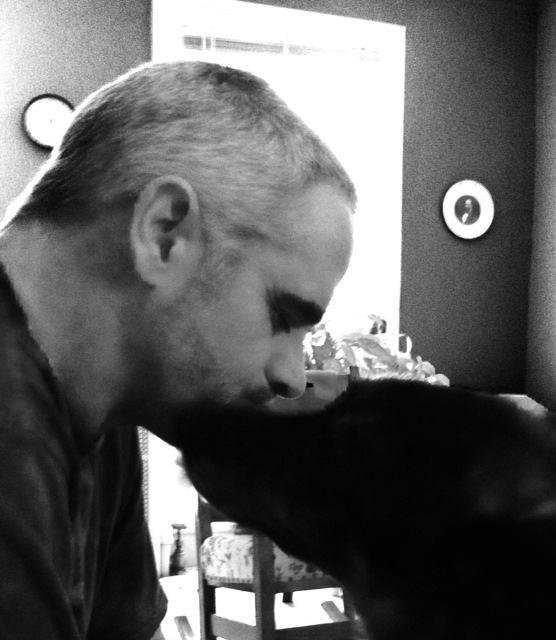
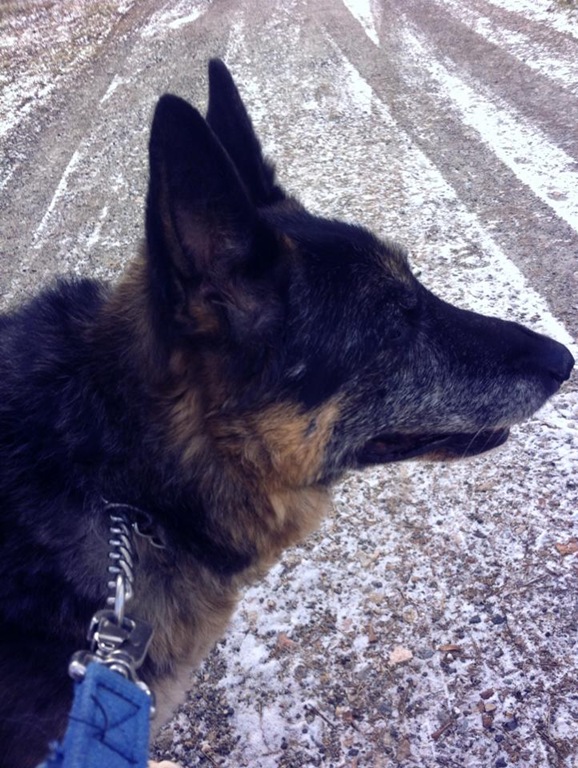
There were no words thought, only moments felt. My head nestled against hers resting on a blanket, the soft puffs of her breathing in my ear. She was sedated, my old German Shepherd McKenzie, who loved and guarded my life with her own every second of our many years together. And now, as the vet injected her with the drug that would end her peacefully, I held her close, tears streaming, no words, though I heard someone saying Thank you, thank you, thank you, and realized it was me whispering in McKenzie’s ear.

And then her last breath came and went. Silence. Moments later the gentle-voiced vet saying, “She is gone,” and still I held her close. The vet and vet tech hugging me, take all the time you need, they said, and quietly left the room. Now words tumbled out, professing love for this amazing animal, my friend, she was my friend. Then laughing through tears telling her I used to say dogs are people too until I realized I was insulting the dogs . I apologized to her still form and thanked her for all she’d done for me, not the least of which occurred a few weeks earlier when a bout with pain had me on the floor pouring sweat. Age and weakness did not stop McKenzie from getting to me and licking the sweat from my face and staying close, watching over me.

McKenzie was 14 when she died. They say that’s a good run for a German Shepherd and I suppose that’s true. Were it up to me she’d have lived forever and gone on to add love and safety to another’s life after I’m gone.

There are people whose passing would bother me less than McKenzie’s. This may surprise some, maybe even offend a few. Can’t help it. Dogs don’t lie, don’t betray, don’t care about skin color, politics, sexual orientation, economic status, whether you do or don’t live with a disability. They love you because you are you. You can’t say that about too many people. You can say that about every dog, save for those who’ve been abused by….wait for it….people.


Last pictures

photo 2 (6)photo 1 (8)

photo 3 (7)564603_572559006146895_26353585_n

McKenzie’s last breath

There were no words thought, only moments felt. My head nestled against hers resting on a blanket, the soft puffs of her breathing in my ear. She was sedated, my old German Shepherd McKenzie, who loved and guarded my life with her own every second of our many years together. And now, as the vet injected her with the drug that would end her peacefully, I held her close, tears streaming, no words, though I heard someone saying Thank you, thank you, thank you, and realized it was me whispering in McKenzie’s ear.

And then her last breath came and went. Silence. Moments later the gentle-voiced vet saying, “She is gone,” and still I held her close. The vet and vet tech hugging me, take all the time you need, they said, and quietly left the room. Now words tumbled out, professing love for this amazing animal, my friend, she was my friend. Then laughing through tears telling her I used to say dogs are people too until I realized I was insulting the dogs . I apologized to her still form and thanked her for all she’d done for me, not the least of which occurred a few weeks earlier when a bout with pain had me on the floor pouring sweat. Age and weakness did not stop McKenzie from getting to me and licking the sweat from my face and staying close, watching over me.

McKenzie was 14 when she died. They say that’s a good run for a German Shepherd and I suppose that’s true. Were it up to me she’d have lived forever and gone on to add love and safety to another’s life after I’m gone.

There are people whose passing would bother me less than McKenzie’s. This may surprise some, maybe even offend a few. Can’t help it. Dogs don’t lie, don’t betray, don’t care about skin color, politics, sexual orientation, economic status, whether you do or don’t live with a disability. They love you because you are you. You can’t say that about too many people. You can say that about every dog, save for those who’ve been abused by….wait for it….people.


Last pictures

photo 2 (6)photo 1 (8)

photo 3 (7)564603_572559006146895_26353585_n

Books read in 2013

1) “Mr. Sammler’s Planet,” by Saul Bellow

2) “Ravelstein,” by Saul Bellow

3) “Bunner Sisters,” by Edith Wharton

4) “The Dean’s December,” by Saul Bellow

5) “Morte D’Urban,” by J.F. Powers

6) “A Theft,” by Saul Bellow

7) “The Bellarosa Connection,” by Saul Bellow

8) “Teeth, Dying & other matters,” by Richard G. Stern

9) “Tales of Grabowski,” by John Auerbach

10) “The Actual,” by Saul Bellow

11) “A Father’s Words,” by Richard Stern

12) “Other Men’s Daughters,” by Richard Stern

13) “A Widow for One Year,” by John Irving

14) “Natural Shocks,” by Richard Stern

15) “Stitch,” by Richard Stern

16) “Wise Blood,” by Flannery O’Connor

17) “Golk,” by Richard Stern

18) “My Life as a Man,” by Philip Roth

19) “Zuckerman unbound,” by Philip Roth

20) “Anatomy Lesson,” by Philip Roth

21) “The Prague Orgy,” by Philip Roth

22) “Framley Parsonage,” by Anthony Trollope

23) “Scoop,” by Evelyn Waugh

24) “The Moviegoer,” by Walker Percy

25) “The Counterlife,” by Philip Roth

26) “The Last Gentleman,” by Walker Percy

27) “The Facts,” by Philip Roth

28) “The Adventures of Augie March,” by Saul Bellow

29) “Patrimony,” by Philip Roth

30) “The Plot Against America,” by Philip Roth

31) “Sabbath’s Theater,” by Philip Roth

32) “Half a Life,” by V.S. Naipaul

33) “Staggerford,” by Jon Hassler

34) “American Hunger,” by Richard Wright

35) “Charles Dickens: Volume One,” Edgar Johnson

36) “The Staggerford Flood,” by Jon Hassler

37) “Jude the Obscure,” by Thomas Hardy

38) “The Great Dissent,” by Thomas Healy

39) “Eclipse,” by John Banville

40) “The Headmaster’s Dilemma,” by Louis Auchinloss

41) “The Rector of Justin,” by Louis Auchinloss

42) “Richard Wright: The Life and Times,” by Hazel Rowley

43) “Thornton Wilder: a life,” by Penelope Niven

44) “The Winter of Our Discontent,” by John Steinbeck

45) “Rex Stout: a biography,” by John McAleer

46) “The Idiot,” by Fyodor Dostoyevsky