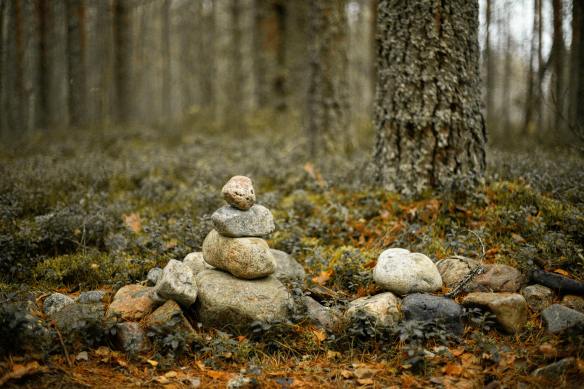
Choose Kindness

If choosing kindness over aggression is believed by some to be weak, then what makes it so hard for so many to be kind? After all, if kindness is weakness, shouldn’t it be easy?

I believe reality teaches us that acts of kindness, responding with nonviolence rather than violence, talking rather than shouting, takes strength. Pure, unadorned, strength.

Dr. Martin Luther King Jr. has been one of my heroes since I was a little boy. Our family’s pastor, Reverend Wilbur O. Daniel, marched with Dr. King. I don’t know anyone who thinks Dr. King was weak.

The question is, what makes it hard for so many of us to choose kindness over aggression? The answer, I believe, is vulnerability. When we’re aggressive whether mildly or not-mildly expressed, no one can be emotionally close to in a healthy way.

Aggression builds a moat around us that makes it all but impossible for anyone to get close to us. Aggression can be an armor that prevents intimacy.

Lastly, there is this. If you look around you at the world we are all in right now, the words from various leaders of all walks of life, wouldn’t it be healing for us all to see kindness and communication and problem solving rather than cruelty, verbal battle, and problem making?

I say, choose kindness.

Quiet

Quiet

A sweet sound

Heals my depths

All the way

Through

Kindness & compassion

The Dalai Lama is right when he tells us,“Be kind whenever possible” and “if you want others to be happy, practice compassion. If you want to be happy, practice compassion.” 

There is no doubt in my mind that  kindness and compassion  are the healthiest (and strongest) choices on the table. But being kind and compassionate is not always easy; nor is it always pain free. I would be surrendering my allegiance to honesty if I were to say I am kind and compassionate whenever possible, but that allegiance is under no threat when I say I try to be. And when I am not, and, on occasion, strike back in kind at someone who’s wounded me, I try as soon as possible to own it, apologize, and mean it.

There a few things I appreciate and value more in someone than their capacity for kindness and compassion. It takes no particular skill and little, if any, courage, to be cruel and nasty. It would also be unjust to universally define someone who’s been cruel and nasty as bad.

The online Webster Dictionary defines kindness as “the quality or state of being kind” and compassion as a “sympathetic consciousness of others’ distress together with a desire to alleviate it.”    Kindness does not mean you don’t hold others (including yourself) accountable for their choices. The goal is to do so with kindness and compassion. Not easy. Very hard, when responding to someone who’s just wounded you in a moment of anger (it is helpful to remember that anger often has sadness as its underpinning) and blisteringly hard when that someone is a person you love and care about.

There is a perfectly understandable question that deserves an answer. What makes responding with kindness and compassion the healthier  choice when I’m the one who’s just been hurt? There is, I believe, a good answer. I don’t believe someone is having a healthy respectful relationship with self when they are lashing out someone in a hurtful way. In fact, I believe it is just the opposite. I think their internal experience of self  is in fairly rough shape.  In most cases their damaged self-image was not their doing. I know many (including me) who’ve lived through various forms of abuse, who’ve had acts of physical and emotional violence perpetrated against them. The struggle to rediscover and, in some cases, discover for the first time, that their truth is as valuable and good and beautiful as anyone on the planet is a steep climb to be sure.

Now, if you respond in kind, and wound them back, you are reaffirming their damaged self-image and strengthening its role in their life.  If that’s what you really want to do, then perhaps you’ve got some work to do on yourself; there’s no shame in that. If it isn’t, please consider this. During the time you are responding with kindness and compassion you are sending the following message to the person. You see their value and worth and you are not  defining them by their behavior.

While we are not responsible for the abuse and violence perpetrated against us in life, we are responsible for healing from it, and we are responsible for the choices we make as a result of it.

As for the few who think it is an act of weakness to respond with kindness and compassion, let me pose the following question. If it is an act of weakness to respond with kindness and compassion, then why is it so hard to do?

PEACE

It is no coincidence that the majority of Christmas cards I’ve had the pleasure to retrieve from my mailbox this year have the word peace on them. In many respects, the word, peace, is my favorite word in the language. Not for its sound, mind you. I think the word Tuckahoe may be one of my favorites when it comes to a word’s audio reality.


With my country at war on two fronts, it makes sense peace is on the minds of many, in and out of my country.


Peace, real peace, comes in many forms. The human mind and body, relaxed and at ease. A society built on understanding and acceptance rather than judgment and harsh discipline. There is the peace that comes with the alleviation of hunger and suffering. There is the spiritual peace one feels when experiencing a sunrise or sunset. There is the peace one feels when holding hands with a loved one. There is something gentle and exquisite about hand holding. While I don’t think I’ve been as good at it as I would like to be, the wonder of it is not lost on me.


Then too there is something Dr. Martin Luther King Jr. once said: “True peace is not merely the absence of tension: it is the presence of justice.” It dawned on me, when I read that sentence of King’s, that there cannot be peace where there is injustice.


There is also the cautionary note sounded by Ralph Waldo Emerson in his essay Self Reliance. “A political victory, a rise in rents, the recovery of your sick, or return of your absent friend, or some other quite external event, raises your spirits, and you think good days are preparing for you. Do not believe it. Nothing can bring you peace but yourself. Nothing can bring you peace but the triumph of principles.” While I am not sure that I entirely agree with him, I do agree that no one but you can bring you peace. It is in how you respond to and relate with the events in life, not so much the events themselves. Okay, maybe I do agree with Mr. Emerson. More thought required here.


I know that for me and quite a few others I know, this has been a brutal year. I have had been stabbed in the back by a nice array of slimy types, one or two so steeped in their own arrogance they don’t think I know it’s them that did the deed, and still others so oblivious to the fact their fellow human beings have feelings they are, I sadly suspect, beyond repair or redemption. Thankfully the repair and redemption parts are not for me to determine. Do I forgive them? Yes, of course I do. But do not for a moment think that forgiving them means I do not think they should be held accountable. They should be and they will be. Remember what King said about the presence of justice.

When I talked quite some time ago to Brother Gregory, a wonderful friend of mine, about my anger and hurt at being betrayed by some I trusted, he instantly right-sized me by saying, “Peter, people betrayed Jesus. What makes you think they won’t betray you?”


This has been a rather wandering and poorly written piece, and for that I apologize. I can attribute it to my still fighting off a fever but I think that would be a tad disingenuous on my part.


Here is what I can say, to all of you, including those that done me wrong,who read this blog. I do hope the day comes when peace, true peace, is your constant companion.


__________________________________________________________________