On writing

If you want to write, you need to believe your words are valuable enough to put on paper. They are. I’m dead serious. Your words have a right to be written because they are your words. You are real. Your voice, spoken or written, has as much value as any other voice – on the planet.

And try not to fret or wrap yourself in guilt because you didn’t remember to write something down. My history is littered with now forgotten sentences, phrases and words I fell in love with and wanted to use one day, and never did. I don’t imagine mine is a unique experience, other than it is mine, and no one (that I know of) is living my life but me.

I know that none of what I said here will make writing perpetually comfortable.  I don’t think it is supposed to be. Writing forces you to be fully alone with yourself, and fully connected with yourself. Not easy. Sometimes I write because I want to, always I write because I have to.

The page is your world

This may be the most efficient way of writing. Simply put words on a page, and have done with it. This is your page. These are your words. Here, of all places, you need answer to not a soul, living or dead. This is a statement of fact, friend. This, the page, is your world. Doesn’t matter whether others read this or not. I know ache fills you at this. It’s only life, each sentence, word, one movement closer to the end.  

On writing – Oct. 29, 2017

The best writing advice I ever received was given to me by Louis Sheaffer, a staggeringly wonderful writer in my view. Mr. Sheaffer received a  Pulitzer Prize for the second of his two-volume biography of playwright, Eugene O’Neill. Another remarkable writer and person, to put it mildly.

I met Mr. Sheaffer at his home in Brooklyn Heights around 1980. I’d been bold enough to mail him a script for a play I’d written with a letter written by my nervous hand asking him to read it. And he did! He called me, and invited me to his home, an apartment that was a writer’s workplace. I remember a large and long wood writing table and index card files, everything was wood; it was a beautiful sight.

It is only now I realize Mr. Sheaffer made me feel less alone as a writer. That I was unpublished in any way at the time was irrelevant to him. He knew I was a writer. That this might not sound like much to some is yet another irrelevance.

The task of writing is one of those things that requires, not just being alone, but being alone as completely as you possibly can in the moment you are in. When writers know they are safe with each other, the camaraderie is intimate and glorious, and humbling.

So here is the advice Mr. Sheaffer gave me. “Whatever it is you want to write, read a lot of it. If you want write plays, read a lot of plays, novels, read a lot of novels, poetry, read poetry,” and so on.

Let me tell you, for me, he was spot on. I’m right currently reading a novel called The Hamlet by William Faulkner. His writing is Picasso in English. He takes sentences where most others don’t tread. It’s not a matter of fearing to tread,  in the least. It’s usually a matter of not seeing the trailhead, as it were.

Charles Dickens’ writing displays an understanding of people, of children (bless him) and life’s environments so thoroughly I just wish I could have met him and thanked him and hugged him.  I will re-read a sentence or paragraph or section because I want the experience again! Do not people listen to a song more than once! I’d avoided Dickens for some knuckle-headed reason, no doubt rooted in the poison soil of judgment, and then, around 1990, thinking about Mr. Sheaffer’s advice, began reading him. Started with his first book, Pickwick Papers

Going to my grave without experiencing Dickens’ writing would be hell all on its own.

Mr Sheaffer in August 1993 in the Long Island Hospital in Brooklyn, New York, the same hospital that saved my life after I was held up and shot in 1984.

An amazing experience, life.
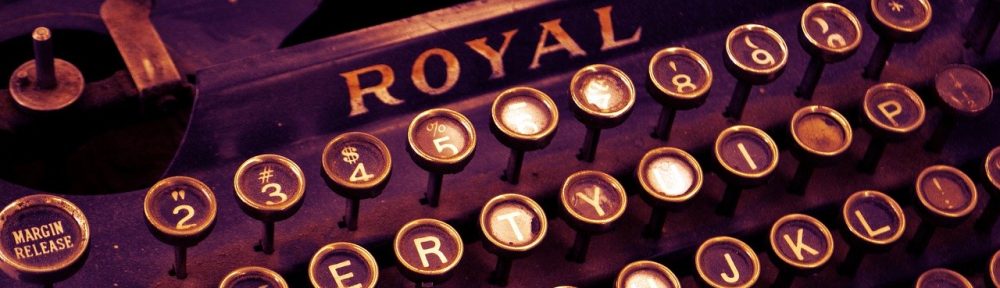


Getting comfortable

What is it I am home about? He asked this out loud in his kitchen as he poured his second cup of morning coffee. He could not focus. He knew this and wished it wasn’t so. He knew wishing warranted genuine sympathy and had about as much influence over life as a tree stump.

These days he felt himself to be a scramble of movements, tics, of a sort. Not a tic like some sudden facial flinch, but a shifting of the shoulders, a turn of the head, a stretch of the neck, a shift in sitting position. A restlesness coated in the sizzle of terror. Sometimes he’d notice himself walking back and forth from one room to another, a small trip in a small apartment, talking to his dog, a damn fine listener by any measure.

Movement. That was the thing. Move. Stay in motion. This is not an easy task when a lot of the world scares the bejeezus out of you. Movement, he was sure, was key to feeling better and, if he got really lucky, happy, on occasion. 

Getting comfortable in life was a never ending process.

Beware The Sappatized Word

It can be a lot of work getting here to this blank page. It was climbing a mountain of anxiety under the power of thought, and, okay, strength. I’m not comfortable with the word courage. I mean, yes, perhaps in a pure sense it applies, but for me the word courage has a boastful connotation, and I am not comfortable with that. So I respectfully reject it.

We fuck words up, stain them with the one-two punch of judgment and connotation. Sometimes we inject them so many times with some inexplicable insidous honey-like ethereal substance, we sappitize them. Sappy, holy shit! Like fingernails on a chalkboard.

Sappiness makes me want to flee.

I’ll give you an example of a word that’s been sappitized. Darling. Darling is a beautiful word. It derives, in part, from the word, dear, defined in the New Oxford English Dictionary as, “regarded with deep affection; cherished by someone: a dear friend.” Come to think of it, in some ways, dear too has been sappitized. A full-contact kissing moment would be impossible for me in response to, “Kiss me, dear.”

I am wrong.

Just now — in the writing moment — I realized I was dead wrong.

I have experienced being deeply in love. Our beings were in as perfect alignment as two beings could be. If she had said, “Kiss me dear,” perhaps during one of those sweet-gentle holding each other moments, I would’ve kissed her in a heartbeat — with all my heart and soul.

Stunning what emerges when you write.